The Oxford Learning System
Because life’s too fast to learn slowly.
A free video course on the skill behind every other: how to learn. The techniques that make the biggest difference, and when to use each one, for a new subject, a new job or an exam.
Free · 11 lessons, about 2 hours of video · Instant access
Years of learning, and almost none on how to learn
You wouldn’t buy a car without knowing how to drive, but we often spend fortunes on our education without knowing how to learn.
It keeps costing us after we leave. Opportunities are everywhere, and the faster we can learn, the faster we can adapt to new situations and make the most of them, in our studies and at work.
The good news: we’re more limited by our techniques than our talent. Master a few fundamentals and your default way of learning starts to overlap with the best way.
The techniques, and when to use them
I’ve taken an 80:20 approach: only the techniques that stay practical throughout your studies and career, grouped by what they’re for.
-
Focus on what matters
Scoping
A framework for intentional learning: decide what matters before you start.
Revision timetables
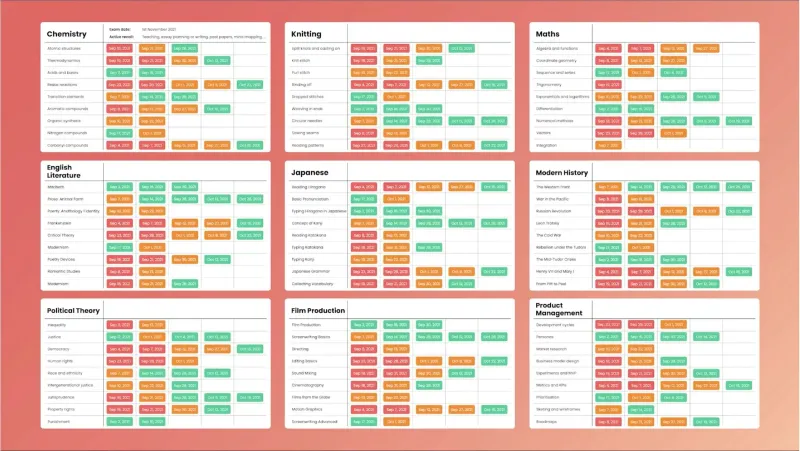
Prioritise your practice with an admin-light timetable instead of a cumbersome schedule.
-
Achieve more with less
General to precise
The backbone principle for going from nothing to knowledge on a new topic.

The Feynman Technique
Understanding is the foundation of memory. Spot the gaps in what you know and fix them.
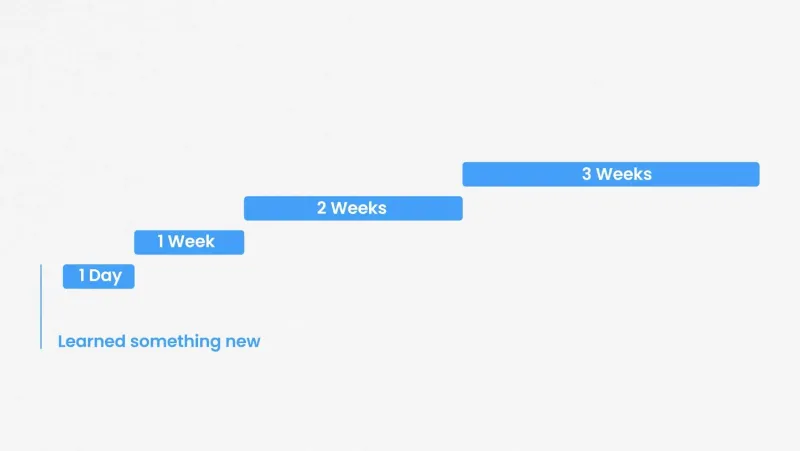
Spaced repetition
Remember more in less time, with reviews spaced out after you learn something new.
-
Work sustainably
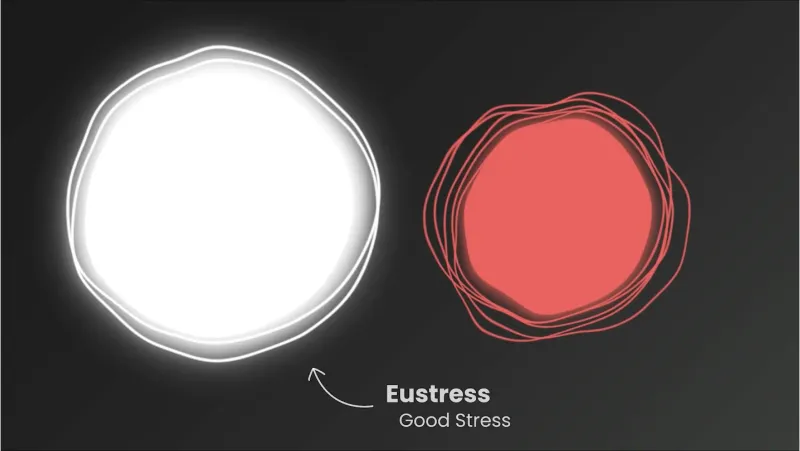
Good stress, bad stress
Use stress to make your knowledge less fragile to stage fright.
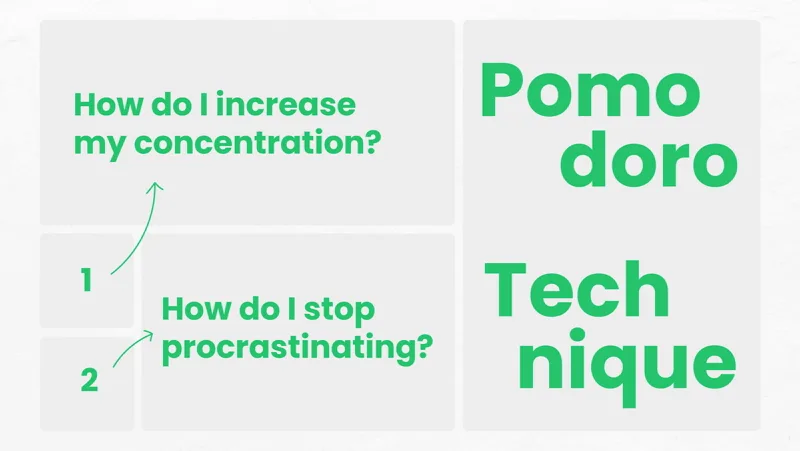
The Pomodoro Technique
Squash procrastination in short, focused rounds.
Try one now: General to precise
We learn faster when we introduce ourselves to a new topic by building up a general picture first, then moving on to the material that gives us a more precise understanding of its nuances.
Switch between the two ways in. Same topic, same books at the end; a very different climb.
Start with the most precise source and every page is uphill.
Quick, general sources first for the big picture, then the precise ones. Each step is small.
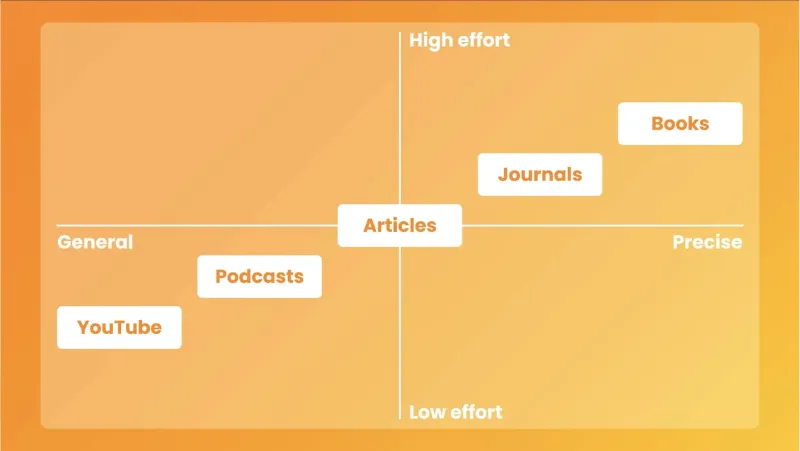
The course’s chart ranks sources from general to precise and from low to high effort: YouTube, podcasts, articles, journals, then books.Knowing when to use a technique matters as much as knowing how, so the course starts with two principles: Honest Productivity, for avoiding productivity sugar highs and spending your time in more rewarding ways, and Practical, not perfect.
See inside
 Play the trailer (29 seconds)
All the lessons
Start here
- What is the Oxford Learning System?
- What’s included in the course?
- Honest Productivity Untangled
- Practical not perfect
Focus on what matters
- Scoping: a framework for intentional learning
- Retrospective revision timetables: prioritise your practice
Achieve more with less
- General to precise: a strategic way to make sense of new topics
- The Feynman Technique: learn anything faster
- Spaced memory repetition: remember more in less time
Work sustainably
- Good stress, bad stress: motivation and performance
- Pomodoro technique: squashing procrastination

Who’s teaching
I’m Jamie. I’ve taught since I was 16, starting as a tutor. In 2020 I built Oxbridge Masterclass, a free portal used by one in five UK schools to help students with university applications during the pandemic.
At Magdalen College, Oxford, I built the note-taking method that became Oxford Notes. This course gathers the rest of what I’ve found works: deciding what to learn, making sense of it, remembering it, and keeping going.
– Jamie Miles
Is it for you?
It’s for you if
You need to get on top of new subjects quickly, at work or in your studies.
You were taught what to learn, but never how.
You’re preparing for exams and want a plan that isn’t a punishing timetable.
Probably not if
You want a note-taking method. That’s Oxford Notes, the book.
You want a full syllabus in one subject. This teaches how to learn, not what.
Questions
Is it really free?
Yes. Sign up with your email and you get the whole course.
How long is it?
11 lessons, about two hours of video. Most lessons are around ten minutes; the hands-on demonstrations run longer, so you can see each technique in use.
What format does it take?
Video first. Each lesson comes with reference notes and searchable closed captions in English, plus suggested projects and activities so you can start using the techniques straight away.
Do I have to finish by a certain date?
No, that would be stressful. Learn on your own terms, in bite-size pieces or in one sitting.
How is it different from Oxford Notes?
Oxford Notes is a book about one thing: taking notes that help you understand and remember what you read. This course covers the rest of learning: what to focus on, how to make sense of a new topic, how to remember it, and how to keep going.
Start learning faster
FreeThe whole course. Sign up with your email.
- 11 lessons, about 2 hours of video
- Reference notes and searchable closed captions
- Suggested projects to try each technique