I already know the name of my next book: The Last Google. It will be dedicated to my Dad. The idea for the title came from a bittersweet discovery on his phone after he passed away.
When we die, we leave echoes. They get quieter as time passes. Lipstick‑stained mugs get cleaned. Beds go cold. Clothes get laundered. Phone numbers get disconnected and reassigned to strangers. Recollections start to fray.
The night my dad died, my sister and I returned to the family home with a plastic bag of his personal effects. Wallet. Keys. Glasses. His phone. I sat on the edge of his bed, the one he and Mum had slept in for decades, and started chasing echoes.
I reached for the phone and typed in the passcode. The screen lit up. His wallpaper was still the default. I wanted to know what his last few weeks had looked like. Who was he messaging? What was he saying? What pictures had he taken? What was he searching for? These were the loudest echoes I could think of. The closest I could feel to him.
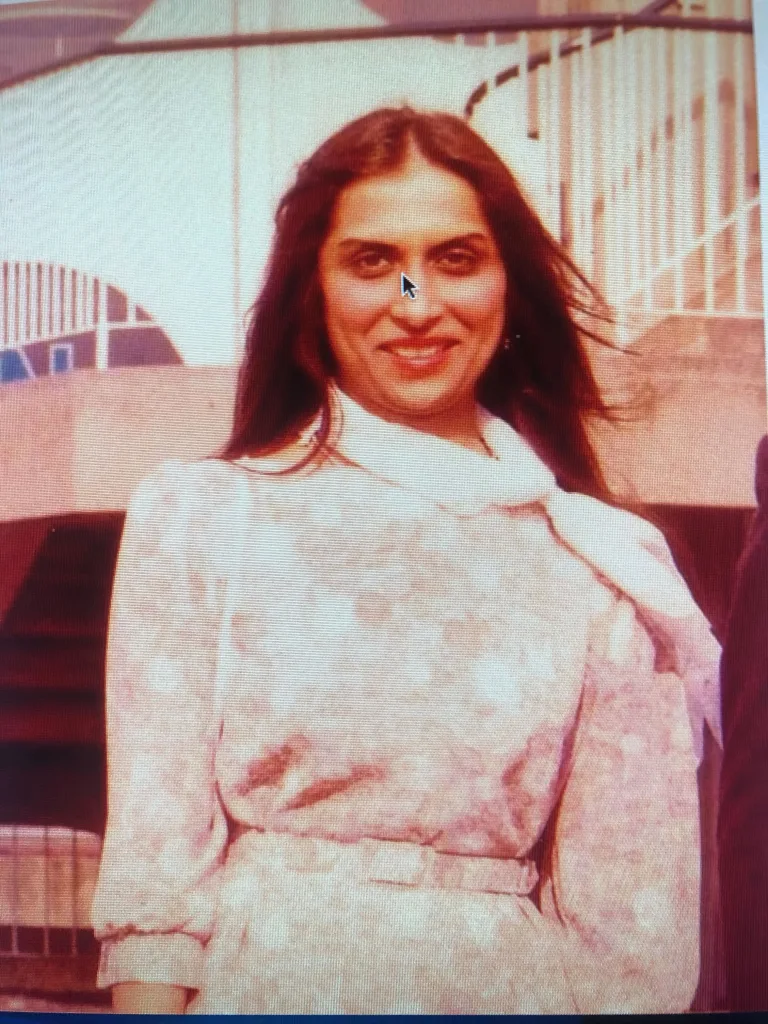
I opened WhatsApp. Messages to my sister about dinner. A few exchanges with relatives. Nothing earth‑shattering. I opened Photos. The camera roll was a mix. There were accidental shots: the ceiling, his pocket, a blurry snap of a car. Classic Dad. There were also screenshots. I didn’t realise he knew how to do that. He also had photos of Grandma, me, and my sister. One of the most recent pictures was of Mum. He didn’t like talking about her. The pain of losing her was still too raw, though sometimes his silence left me wondering if he truly missed her. Looking at his camera roll, those niggling worries evaporated as I saw Mum’s face smiling back at me. Every portrait had an odd extra detail: a mouse cursor. He must have found the pictures on the computer and didn’t know how to get them on his phone. His resourceful solution was to photograph his favourites rather than ask how to transfer them and have his secret mission rumbled. Again, classic Dad.
I opened Safari next, looking for his search history. It was empty. Of course. I’d forgotten. Dad hated typing. The keyboard was too small, his hands too accustomed to screwdrivers, wrenches, and saws. He reserved his browsing for the computer, where he could wrestle with a full‑size keyboard.
That was until I’d shown him dictation on the Google app a few years ago, how he could press the microphone and just speak his questions instead. He’d loved it. ‘Why didn’t you tell me about this before?’ he’d said, half‑laughing, as if I’d shown him magic and been holding out on him.
I opened the Google app and tapped the search bar. A list of his previous queries slid down the screen. Blue links. Grey timestamps.
His last searches were all from the middle of the night. Around 1 a.m. on the 6th of December. That was his last night at home. He couldn’t sleep. The pain in his chest had reached a pitch and wouldn’t settle. He’d reached for his phone.
At the time, he thought it was indigestion. Later that morning, after he’d been escorted to hospital in an ambulance, the doctor would tell us it was angina. Dad had said nothing to us. A man of his generation. Suffering quietly. It was his worry, and he didn’t want to burden us.
If he’d called out. If he’d woken my sister, who was sleeping in the other room. If he’d made a fuss sooner, things might have been different. But my dad was raised with the misplaced mantra to keep calm and carry on. Boys don’t cry. All pain can be endured. Dads must be strong, especially for their kids. I’d say being alive is more important, but that’s a debate for another day.
Instead of waking anyone, he reached for the light of his phone screen and told Google what he wanted: ‘Jamie Miles Jubilee Encounter.’
The realisation didn’t arrive all at once. It crept in slowly, then hit like a wave. The last thing he’d searched for was me.
My mind went back to the conversation we’d had a few days before his surgery.
It was just me and Dad in the hospital. My sister had an NHS appointment she couldn’t reschedule without being pushed back another six months. She would join us in the afternoon. Until then, we had some father‑son time. A rare thing, these days. After I’d graduated, I’d moved back home for a while, then left again at twenty‑three. Once you’ve flown the nest, the time you get with your parents narrows. You go from seeing them every day to maybe a handful of times per year.
We were talking about me finishing Oxford Notes and what I was thinking of doing next. He had an idea. Something that was obvious to him, but something he thought I hadn’t realised.
‘You should turn them into a book,’ he said.
He was sitting up against the pillows, fiddling with the edge of the blanket, and resisting the urge to bend his knee in case the patrolling matron scolded him again. The ward was quieter than usual. Machines hummed and beeped in the background.
‘That story,’ he continued, ‘what is it? With the guru Indian man during the Queen’s celebration. Jubilee Encounter, that’s it. How you spun that into a story. You know, not everyone can do that. I definitely can’t.’
He looked at me properly then, that familiar glint in his eye.
‘You should turn them into a book. I’m sure lots of people would read it. You love making people grin with your stories. You could even read them to people on YouTube.’
I smiled. Made some vague noise of agreement. I was exhausted. I’d sprinted to put the finishing touches on Oxford Notes so I could share it with my readers by the deadline. It had been a twelve‑month marathon, and I needed a break.
In fact, I was taking a break. I had given myself the grace of taking two weeks off in December after burning too hot with sunrise wake-ups and intense redrafting sessions. Six days in, I got the call that Dad was in an ambulance. As far as timing goes, it left a lot to be desired. At least I got to see Paddington 3.
In my exhaustion, a chorus of insecurities started to chirp up in the back of my head:
I’m not good enough.
I have nothing to write about.
It’s frivolous.
I nodded, thanked him for telling me, and privately filed the conversation away under ‘one day’. I indulged the fantasy though. He and I chatted about which stories would make the cut. How I could tour and read them to audiences. I think we all need a fantasy to survive, and building one with my Dad took me back to the days of childhood wonder. When life was infinite and we would play make-believe while I sat on his lap.
Sitting on his bed with his phone in my hand, I understood what he’d done.
On his last night at home, unable to sleep because of the pain he refused to name, he had gone looking for me. He had typed my name into a search bar. He had found that story. He had read it, and watched some of my old videos. His joy had gone to his little boy. He wanted to see me, hear me, feel close to me when I wasn’t there.
I sat there for a long time, phone in hand, staring at those words: ‘Jamie Miles Jubilee Encounter.’
It felt like he was reaching out to me from the past. An echo that hadn’t faded yet. A small, quiet proof of his love.
I cried. Not the loud, gasping kind. The quieter kind, where your face crumples, your chest tightens, and you fall into yourself.
In the hospital, my dad’s enthusiasm had met exhausted ears. I’d been too tired to think it could be more than a fantasy. Too caught up in my own doubts.
Now, with some distance, those doubts feel small.
I’m not good enough. I’ll get better.
I have nothing to write about. I’ll chip away at it.
It’s frivolous. No. It’s for my dad. And for me.
I’m writing my next book. It will be called The Last Google.
I’ll write it for the man who loved a chuckle, who thought the keyboard letters moved around on him, who navigated his way to my website in the dark at one in the morning because he wanted to feel close to his son.
For the conversations we couldn’t finish. For the book you told me I could write. For the echoes that haven’t faded yet.
I’ll write it because you reached for me when I wasn’t there, and now I’m reaching back.