At a glance
- Based on the reader question: How do I remember scripts, speeches, and long passages of text?
- I’ve shared two memory tools: one is for facts, the other for lists. Now let’s cover how to recall things verbatim.
- Actors don't memorise lines through repetition, they make lines memorable by understanding the intention and meaning behind the words. That’s the engine behind their incredible feats of memory.
- The first-letter technique is the scaffold: reduce each word to its initial letter, use those letters to retrieve the full word, and gradually remove them until you can recall from nothing.
Introduction
I’ve shared two powerful memory tools with you.
Spaced retrieval handles facts – dates, vocabulary, concepts – by spacing your repetitions over time so that your brain retrieves information just before it forgets it. Acrostics and acronyms handles lists by compressing them into a single hook: one word, one sentence, one box to carry all the things you want to remember.
Neither tool is tailored for remembering texts verbatim: a set of definitions for an exam, a speech you want to deliver without notes, a section of case law, a monologue, a song. For that, actors have a trick.1
I’ve used it to great effect, mostly for exams, and speeches at the front of chapels, stages, or parliaments.
There are two parts to learn. The first is the external mechanics, something I’m calling the first-letter technique. The second is the internal engine that makes the text unforgettable.
What actors actually do
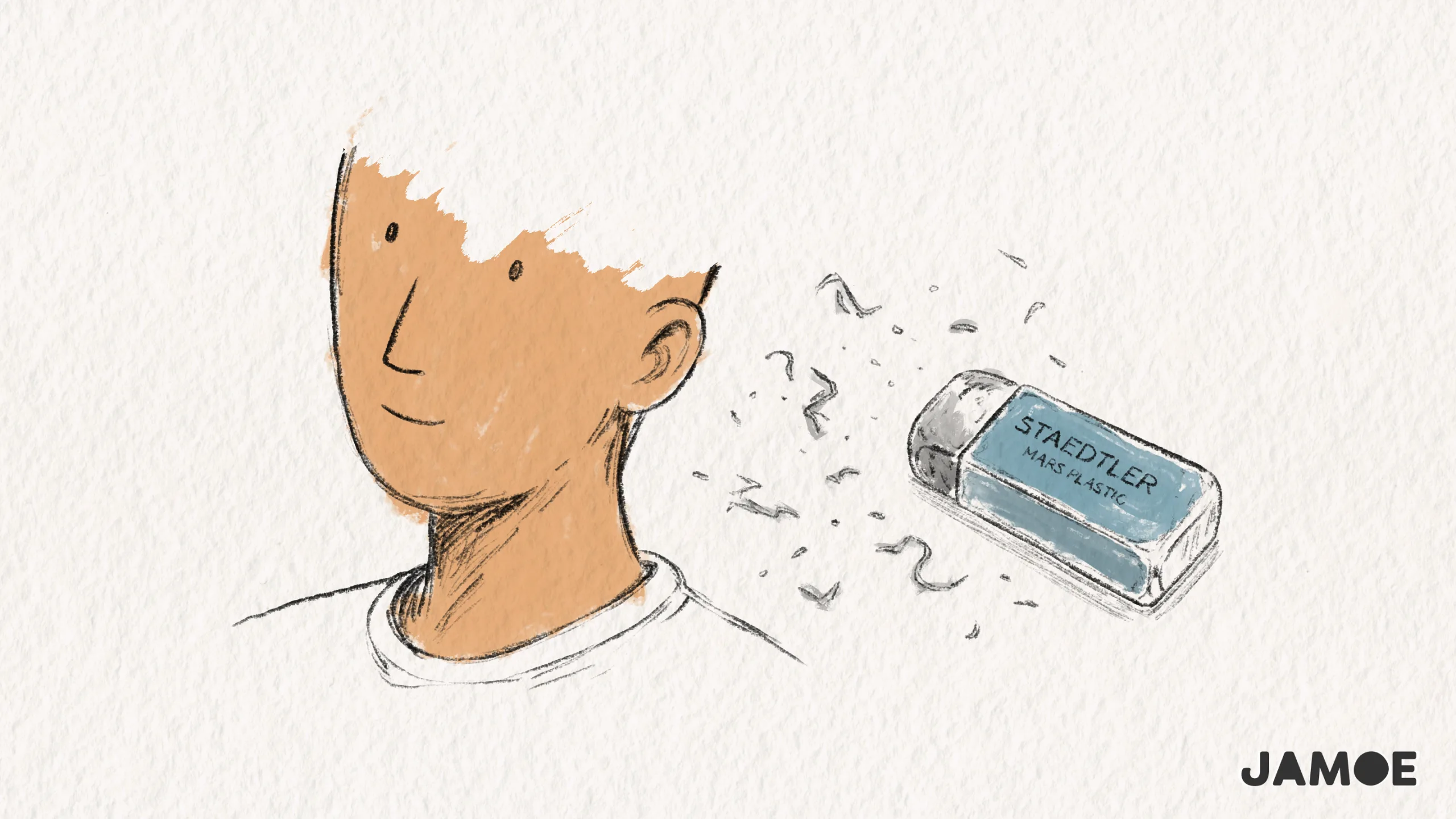
Actors don’t drill lines until they stick. Instead, they make lines memorable by understanding the intention and meaning behind each word.
That was the insight from Helga and Tony Noice after spending nearly two decades studying the memorisation process of professional actors.2
They called this ‘active experiencing’: the actor isn’t moving words from the page into their head. They are inhabiting the character’s intentions, moment by moment. The lines then logically follow from those intentions.
It parallels with how we talk day-to-day. We have intentions, wishes, and goals. The words emerge from those feelings, from the inside-out.
For example, we want to greet a cat. We say, ‘Hello’. When we don’t understand our intention, wishes, and goals, we become tongue tied and the cat goes unacknowledged.
Knowing this means that when you find a passage stubbornly difficult to remember, you’ll know the first suspect is not a lack of repetition. It’s a lack of comprehension: you don’t understand the text well enough.
That’s the engine: we remember what we understand. To help, actors use an easy-to-adopt mneumonic scaffold to get there.
The first-letter technique
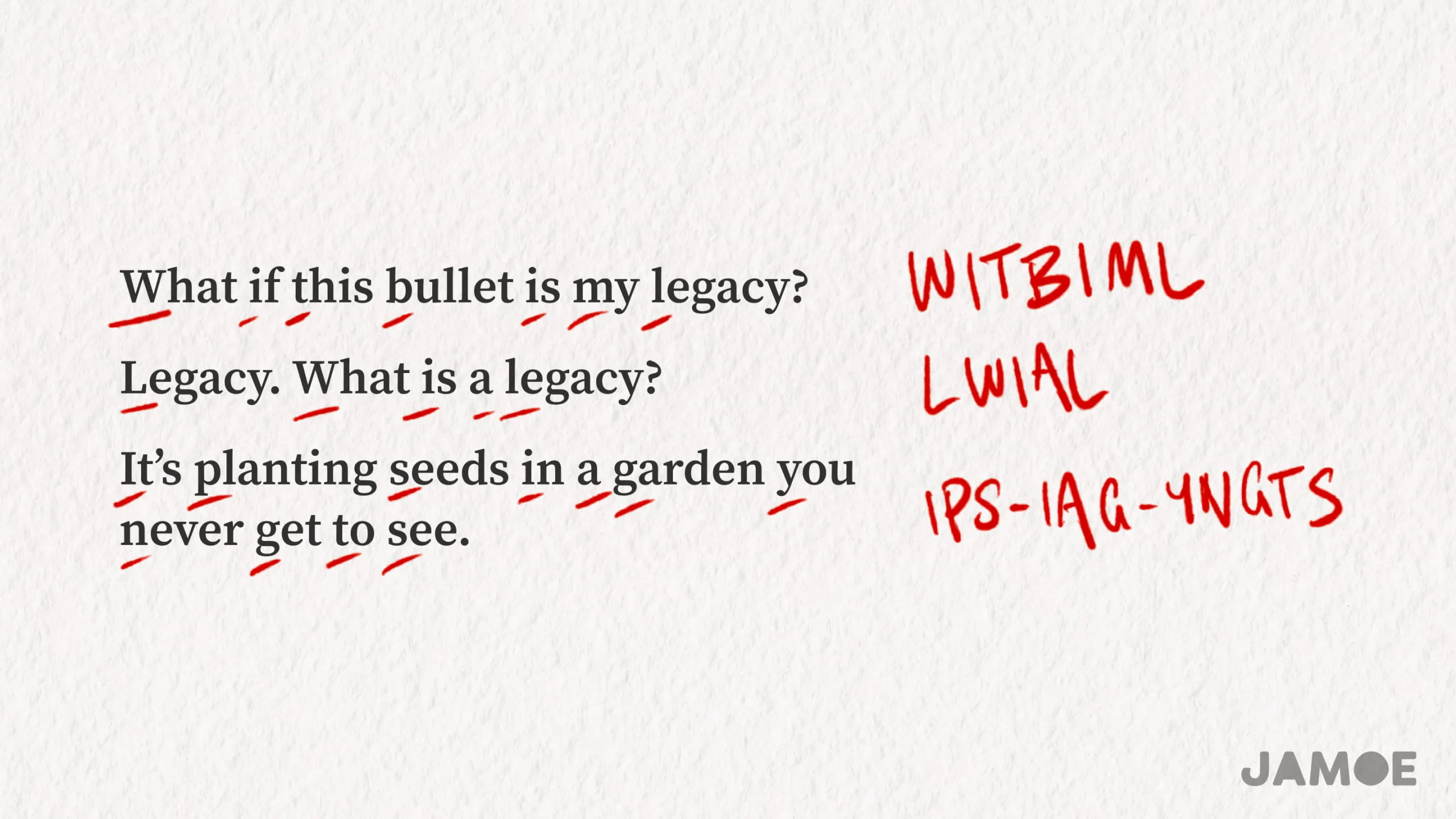
Take the passage you want to memorise. Read it until you roughly know its shape. Then, on a separate sheet, write down only the first letter of every word, in order.
Let’s use one of the most quoted lines in the English language from Oscar Wilde's ‘Lady Windermere's Fan’:
We are all in the gutter, but some of us are looking at the stars.
Reduced to its first letters:
W A A I T G B S O U A L A T S
Each letter is a small nudge for unlocking the full quote, but still effortful enough to give you a memory workout.
This is the mechanism: the first letter acts as a retrieval cue, and retrieval cues work because finding a memory strengthens it in a way that simply reading it does not.3 You are doing the work, not the page.
The three steps
The technique works by gradually reducing the support available to you until there is none.
- Full text: Read the passage aloud, slowly, attending to what it means rather than just what it says. This is 'active experiencing’ in practice: meaning is what makes the words stick. Don't treat this step as a warm-up. It is the work.
- First-letter scaffold: Write out only the first letter of each word and test yourself against it. You will stall. That's good. Each time you stall, glance back at the full text, register what you missed, and continue. The effort of retrieval – not the act of rereading – is what builds the memory.
- Blank page: Once the first-letter sheet stops surprising you, put it away, and recall the passage from nothing. You will find that the scaffold has done its job and made itself redundant.
Why this fills a gap the other tools don't
This technique is an instance of what memory researchers call 'diminishing-cues retrieval practice’: you rehearse with progressively fewer supports until you can manage without any.4 The underlying engine is the same one that powers spaced repetition: testing yourself on something is more powerful than reading it.
The difference is what each tool is built for. Spaced repetition is optimised for isolated facts, the kind of thing a flashcard handles well. Acronyms and acrostics handle ordered lists. Verbatim text, where every word must arrive in sequence, needs a method that respects the shape of the original while stripping away the safety net. That’s why the first-letter scaffold is so effective.
Putting it to use
Pick something you have always wanted to learn by heart – a speech, a poem, a stirring passage from a book. Eight to twelve lines is a sensible starting length.
- Read the full passage aloud, slowly, attending to its meaning
- Reduce it to first letters on a separate sheet
- Test yourself using that sheet until it stops tripping you up
- Put everything away and recall from a blank page
If you stall at Step 4, return to Step 2, not Step 1. The scaffold still has useful work to do.
I have used this technique to memorise many speeches, including the eulogy at my dad's funeral. Even with a grief-scattered brain, I got through the fifteen-minute speech without forgetting a word.
When you can’t afford for your memory to stutter, it’s an incredible comfort to have this in your toolkit.
The often overlooked heart of the technique
The Noices found that the actors with the best recall were those most absorbed in why their character was speaking, not what they were saying. The lines were a byproduct of understanding, not the target of it.
The Wilde line is a good illustration for digging into the meaning behind the words:
Lord Darlington delivers it in Act 3 of ‘Lady Windermere's Fan’, in response to a companion who has just said 'I don't think we are bad.' Darlington is in love with a married woman he cannot have. The 'gutter' is his frank acknowledgement of the moral company he keeps and is a part of. The 'stars' are what he is reaching for anyway: her, an ideal, something worth wanting even if it stays out of reach. The line isn't a hollow aphorism tossed out to sound clever. It is a man making his case for aspiration in the middle of defeat.
Once you understand that, the line becomes almost impossible to forget. It has weight. It has a reason to exist. The words are not arbitrary – they are the most compressed possible version of what Darlington is feeling. And that compression, grounded in meaning, is what lodges it in memory.
The first-letter method makes this concrete in your own practice. The places where you keep stalling are the places where meaning hasn't taken hold. The scaffold doesn't just help you remember. It shows you exactly where to look.
This article is part of the memory series. Other pieces include spaced repetition and acronyms and acrostics.
- The excellent Allison Janney (The West Wing; I, Tonya) is on record as an adopter of this memorisation technique, which explains how she conquerred the incredible dialogue Sorkin wrote for her character C.J. Cregg in The West Wing. ↩︎
- Helga Noice and Tony Noice spent nearly two decades studying how professional actors memorise scripts. Their research found that actors rely on understanding character intention rather than rote repetition. This approach consistently produced stronger recall than mechanical drilling. ↩︎
- The principle that retrieval practice strengthens memory more than rereading is one of the most robust findings in cognitive psychology, known as the 'testing effect'. For a foundational overview, check out Roediger and Karpicke, 'Test-Enhanced Learning: Taking Memory Tests Improves Long-Term Retention' ↩︎
- The formal academic label for this technique is 'diminishing-cues retrieval practice'. The most widely cited study is Fiechter and Benjamin (2018), 'Diminishing-Cues Retrieval Practice: A Memory-Enhancing Technique That Works When Regular Testing Doesn't'. An earlier clinical version of the same principle was described as the 'method of vanishing cues' by Glisky, Schacter, and Tulving in 1986. ↩︎