Hey – Jamie here.
I've gained weight!
Why that's wonderful will make more sense once you read this week's story… which is, unfortunately, nowhere to be found. A syncing error meant I got a sinking feeling when I went to publish, only to discover that all the additions and revisions I'd scribed had vanished.
I suppose that's how it was meant to be.
On the bright side, I did genuinely gain weight – and I have a new article that carries on the season on memory I've been working on. If you've ever wondered how actors recall vast scripts, I unwrap the trick and give you a practical workflow for getting started.
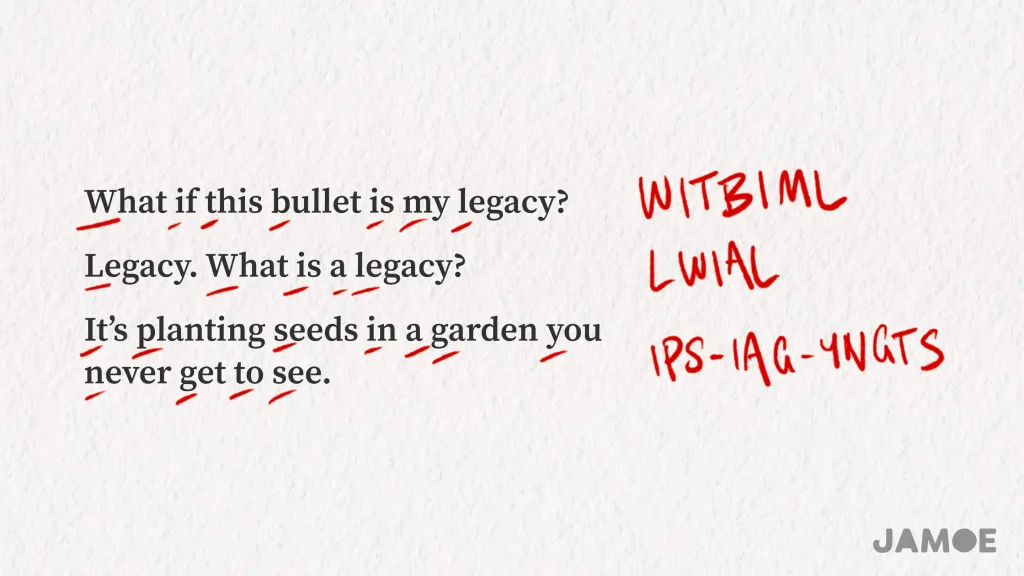
The process depends on the first-letter technique. I've found it incredibly useful when I've needed to remember precise definitions for exams or deliver word-perfect speeches.
I now need to reconstruct all the missing details from my story so it's ready for the next edition. Fortunately, I've been reading a lot about memory. Let's see if I've been paying attention.
Until then, I have a little bit of mythology from my childhood to share.
Table of Contents
- Animal Spirits
- Articles & Guides
- Favourite Finds
- The Darkroom
Animal Spirits
I was seven years old when my grandad passed away. That's my dad's dad. My mum's dad is my nana bapa and he's still with us.
A bit confused, my sister and I asked where grandad had gone. My dad went with a bird-based invention, taking a few cues from reincarnation.
So when a red-breasted robin bounded into our garden a few weeks later, dad declared, 'Look, it's grandad. He's come to visit!'
Being older and telling people about this, apparently it's something that's deeply rooted in British folklore. There's even a phrase, 'When robins appear, loved ones are near'.
Whether it's folklore or an invention of my father, the robins clearly got the memo. When my nani ma passed away, a robin would often flutter onto the garden wall and say hello to my melancholy mum.
The same thing happened when mum passed away. We'd be having some breakfast in the dining room and the courageous little bird would come visit, some times with a friend too. I like to think it was mum and nani ma making up for lost time.
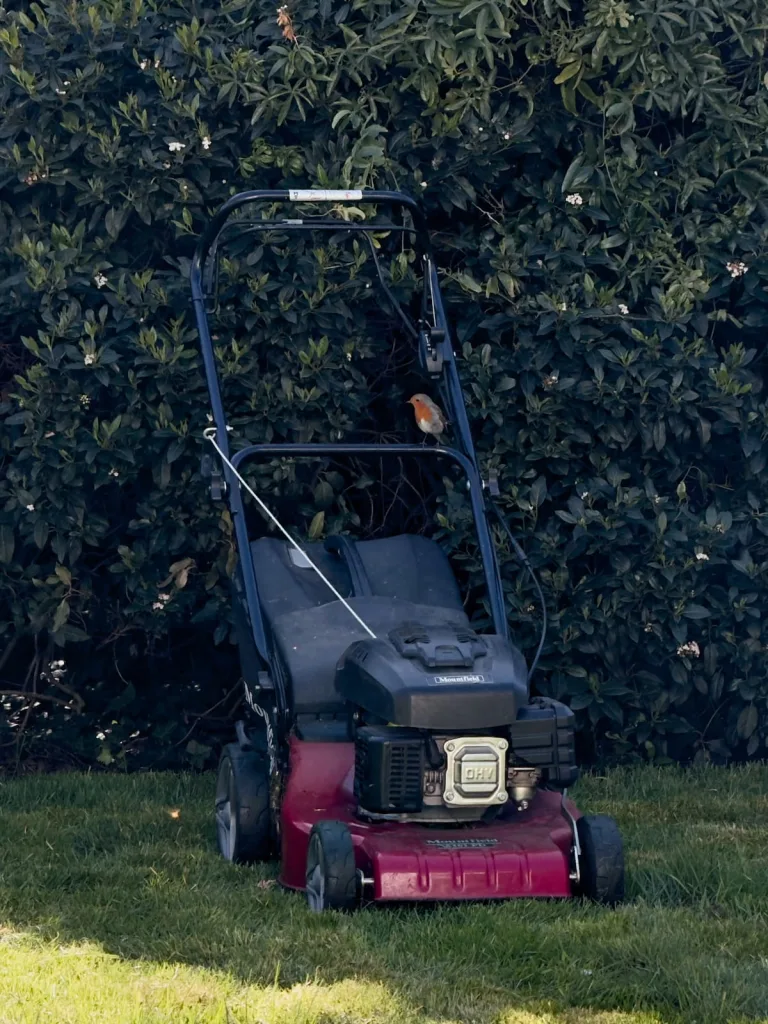
Now you know all that, take a look at this week's photos to see who came to visit when I was mowing the grass in the family home.
Feel free to reply to this message. You can also share your questions, requests, and favourite finds here.
Jamie | @JamoeMills
☀️ From a light jacket day in London
Find a better way to solve problems that matter.
P.S. A reader sent in a cheery note: 'Thank you for your email. For some reason they bring calmness and clarity'. Calm and clarity are quite literally two of the top words I had in mind when I was thinking about how I wanted this newsletter to feel, so I'm grateful it's connecting – and that you took the time to write in. (Some other words I wrote down were playful, practical, and a little goofy.)
Articles & Guides
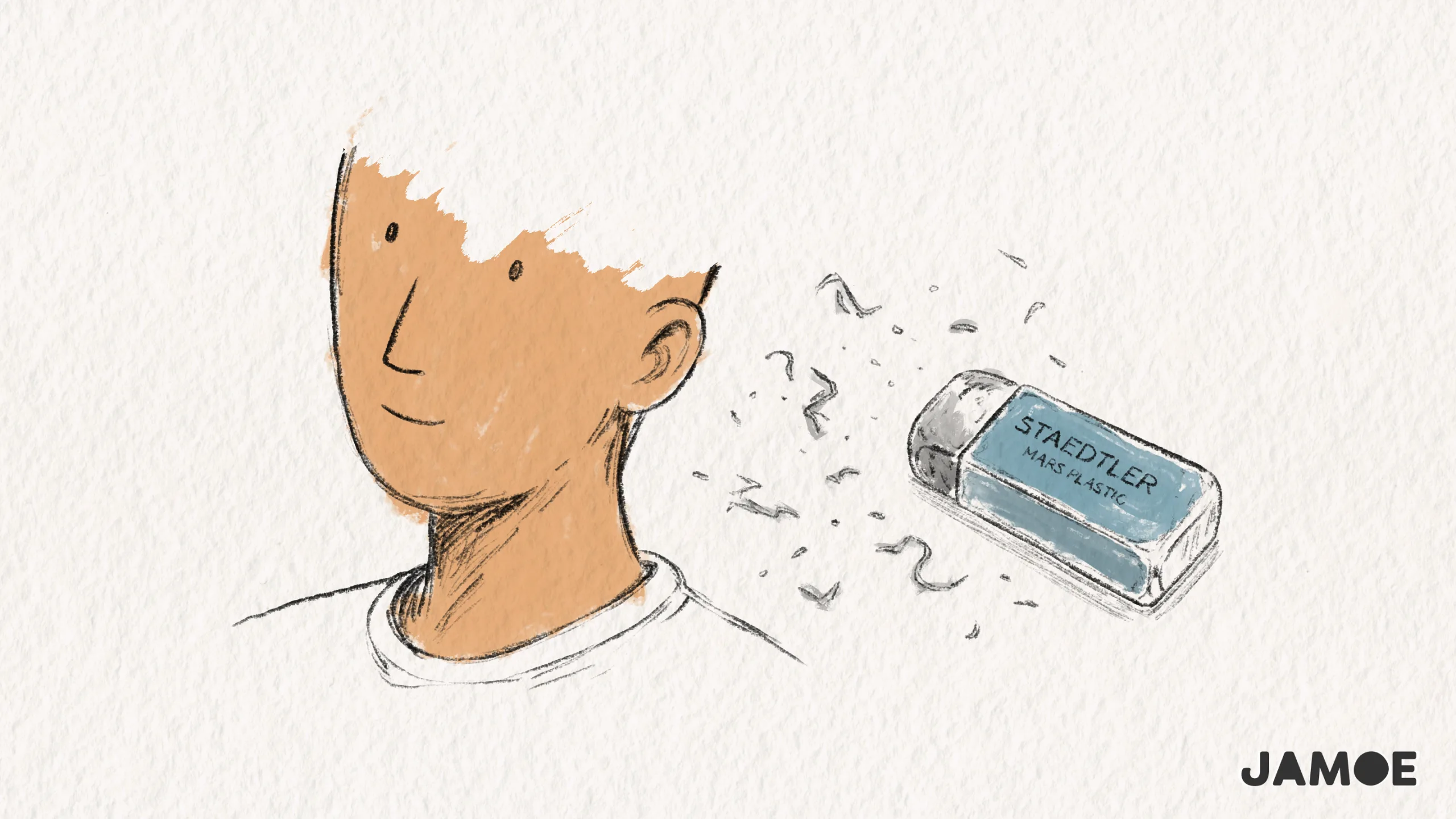
The Actor's Memory Trick: The First-letter Technique
At a glance
- Based on the reader question: How do I remember scripts, speeches, and long passages of text?
- I’ve shared two memory tools: one is for facts, the other for lists. Now let’s cover how to recall things verbatim.
- Actors don't memorise lines through repetition, they make lines memorable by understanding the intention and meaning behind the words. That’s the engine behind their incredible feats of memory.
- The first-letter technique is the scaffold: reduce each word to its initial letter, use those letters to retrieve the full word, and gradually remove them until you can recall from nothing.
Introduction
I’ve shared two powerful memory tools with you.
Spaced retrieval handles facts – dates, vocabulary, concepts – by spacing your repetitions over time so that your brain retrieves information just before it forgets it. Acrostics and acronyms handles lists by compressing them into a single hook: one word, one sentence, one box to carry all the things you want to remember.
Neither tool is tailored for remembering texts verbatim: a set of definitions for an exam, a speech you want to deliver without notes, a section of case law, a monologue, a song. For that, actors have a trick.1
I’ve used it to great effect, mostly for exams, and speeches at the front of chapels, stages, or parliaments.
There are two parts to learn. The first is the external mechanics, something I’m calling the first-letter technique. The second is the internal engine that makes the text unforgettable.
Favourite finds
Things worth passing along.
Do you have a favourite find (ideas, books, quotes, purchases, etc.)? Share it here.
Seven Nation Army (feat. KOYSINA) – Dance Fruits Music & DMNDS (music)
A nostalgic classic reimagined. It’s The White Stripes’ ‘Seven Nation Army’, but with a more energetic, uplifting beat that’s great for writing, cleaning, or pretending your life is a montage.
'The woods would be quiet' (quote)
There’s a bird theme running through this edition, so here’s a quote I kept coming back to while bumbling through my beginner’s singing course:
‘The woods would be quiet if no bird sang but the one that sang best.’ – Henry van Dyke.
It’s a welcome reminder that you don’t have to be the best to be worth hearing.
Student discounts for all (tech/gear tip)
Something I didn't realise until I enrolled in the beginner's singing course. Adult learning centres also qualify you for student discounts, not just being a charming whippersnapper at school or university.
So if there's a course you've been wanting to do, sign up, get your new institutional student email, and then use it to unlock education rates on lots of services and products. For example, you can get around £100 off the new MacBook Neo.
Mitchum deodorant (personal care)
The months are getting warmer in the northern hemisphere, so let's talk deodorant. If you smell, your friends probably won't tell you – and you probably haven't realised, because that's how smell works. We go smell-blind around stable smells, only noticing when things change.
If you think you're overly aromatic, or want to leave sweat-stained T-shirts behind, I recommend Mitchum. It never failed my mum in her forty-odd years of nursing, and it's never failed me when I've needed to be fresh for a business pitch on a hot summer's day.
(Note: this isn't sponsored. I'm just the kind of person to tell you that your fly is down, and thought this might be helpful, if a little unconventional.)
Practise vs. practice (tiny language trick)
How do you know if it should be practise or practice? An elderly lady asked me this in a café this week and I didn't have a neat solution. She did.
The quick test is to swap in the word 'preparation'. If it fits, use 'practice' (noun). If not, use 'practise' (verb).
For example:
- 'I need more practice before the concert.' → 'I need more preparation before the concert.' (it works, so it's the noun)
- 'I need to practise before the concert.' → 'I need to preparation before the concert.' (doesn't work, so it's the verb)
Fortnum & Mason's double helix staircase (London find)
Fortnum & Mason in Piccadilly have installed a new double helix staircase inspired by Leonardo da Vinci's original design. Chatting to the sales assistant, it's the third of its kind in the world, with the other two in a French château and the Vatican.
Being a double helix, the two staircases wrap around each other like strands of DNA, so you can go up and down without crossing paths – apparently to avoid the embarrassment of your spouse bumping into your paramour.
For my purposes, I just loved the efficiency of having foot traffic flow up and down unimpeded. Plus, it's beautiful.
The Darkroom