Hey – Jamie here.
I’ve gained even more weight – and this time, I have the story to explain why that makes me grin.
Carrying on with this season’s exploration of memory, I've turned to one of the forgotten cousins of memory: the comeback. So this week is about the power and consolations of muscle memory, what the science says, repairing my broken body, and the strange way I’ve been eating dark chocolate.
Also, you’re not imagining things. I’ve given the newsletter a glow-up to mark the move to a new email tool. More on that in the next edition.
Table of Contents
- Coming back (in hindsight)
- Articles & Guides
- Stories & Reflections
- Favourite Finds
- The Darkroom
Coming back (in hindsight)
Setbacks don’t get spoken about enough, which makes them all the more shocking when they hit. I hope you haven’t had a major one yet, but they’re sadly inevitable, and when they arrive, most of us aren’t prepared. That’s why I was curious about muscle memory.
After taking a long break from life, I was anxious to investigate how real muscle memory was. So much of my hope to recover rested on my mind and body being able to reawaken my previous levels of performance. If muscle memory wasn’t real, the climb ahead felt crushing.
Fortunately, the science was on my side, and it’s on your side too.
Though I didn’t make it easy for myself. My first few attempts were loaded with frustration; I went too hard too fast. Case in point: the Malala fiasco from edition two, where I tried to pick up my old workout routine, promptly injured my arms, and spent a week walking around like a T-rex.
It’s a good story, but it was disheartening at the time. Setbacks are always charged with the grief of thinking about where you could have been if only the setback had never happened. My mistake was trying to speed-run my way back to where I was, which was possible, but not in the way I did it.
This week’s article gets into the biology of all that. It turns out the body does have ways of slingshotting you back rather than making you climb every step from scratch. Though you have to start slow, let things warm up, and only then put your foot down.
Feel free to reply to this message. You can also share your questions, requests, and favourite finds here.
Jamie | @JamoeMills
☁️ From an overcast day in London
Find a better way to solve problems that matter.
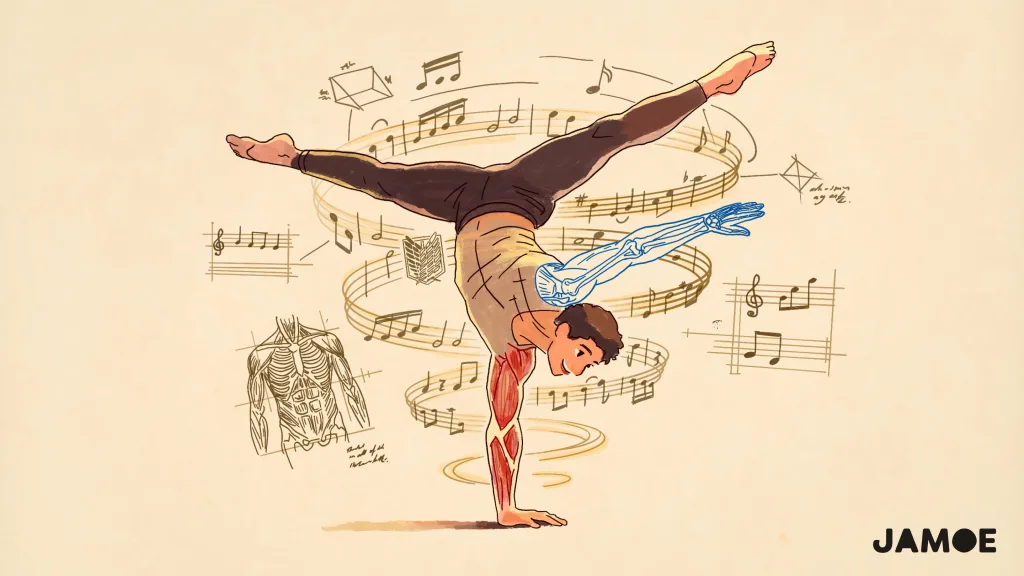
P.S. There’s a little Easter Egg in this week's article cover image that calls back to one of my favourite shows. If you can guess it, write to me, and I’ll share a little prize. I've also experimented with making this week's article more story-led to help the ideas stick. I'm curious how it lands with you. Do you like the new direction?
Articles & Guides
The Comforts of Muscle Memory and The Man Who Came Back For His Son
At a glance
- Based on the reader question: I used to be in great shape and sharper at work. After a rough few years, I feel like I've lost it. Is all that past effort wasted?
- Your past effort is never wasted. When you train your body or mind, you lay down physical and neural structures that persist long after you stop – and allow you to recover far faster than you built things the first time
- The practical upshot: what feels like starting from scratch is actually returning to a compressed version of your past self, one that decompresses much faster than it took to build
Introduction
Your past effort is never wasted. Even after injury, illness, or years of neglect, your body and brain retain far more of what you built than feels possible and, when you return, you recover it far faster than the first time you built it.
This cuts against what we usually tell ourselves when a setback hits: I'm back to square one. All the effort and pain I invested has been wasted. It's a demoralising story with an outsized influence on our thinking – which is annoying, because it's also false.
So let's get into the consoling truth and change how you approach your next comeback.
In this piece, I'll share how muscle memory works at a cellular level, and why previously trained muscle regains size and strength significantly faster than novice muscle ever builds it. I'll then show you the parallel in the brain: how old knowledge and skills sit dormant rather than deleted, and how relearning works faster than first learning. Finally, I'll offer a small set of practical moves for using this knowledge to actually get back in the saddle – including one reframe that neatly dismantles the most demoralising part of starting again.
But first, a story about a man sitting on a sofa in Los Angeles, wondering whether it was too late.
Stories & Reflections
The Oil Layer

This week, I figured out that the entire wellness supplement industry was, for most practical purposes, a very attractive wall of nothing. I did this while trying to fix my eyes. Nobody was particularly interested.
***
'That's such a Jamie way of eating dark chocolate.'
Martin had recognised a pattern I'd overlooked. I, over a post-comedy gig drink, had explained how I had spent February eating precisely the right amount of dark chocolate to measurably improve my mood, having reverse-engineered the optimal amount needed for the magnesium inside to outwit the foul anxiety and depression I'd been wrestling with.1
I guess that is a slightly special way of eating dark chocolate.
We laughed and toasted to my friend who had just made his stand-up comedy debut. As my friend embraced new horizons, I doubled down on old habits and thought of the next single-subject clinical trial to run on myself.
To understand my next move, you need to understand the shape of the three years that preceded it.
Favourite finds
Things worth passing along.
Do you have a favourite find (ideas, books, quotes, purchases, etc.)? Share it here.
Sir David Attenborough celebrates 100 years (video)
May 8th marked Sir David Attenborough's 100th birthday! To celebrate the occasion, the BBC put together a special birthday video message from the King. It's sweet, wholesome, and features lots of feathered and furry friends. Watching it, I noticed the card they use is the same one my grandma received for her 100th.
Google has also added a new Easter Egg to Search. Try searching 'David Attenborough' and see what pops up.
Enzo Ferrari's late start
Enzo Ferrari didn't sell his first car until 1947, when he was 49. That first Ferrari won the Rome Grand Prix in its debut year. The company is now worth billions and has the world’s best stock ticker ‘RACE’. I’ve filed this under 'calming counterexamples' whenever the 'make it by 30 or don't bother' drumbeat makes me retch.
Dinosaurs, and humanity’s curse to age (video)
Mammals age strangely fast compared with reptiles of a similar size, but why? PBS Eons made an explainer: for about 100 million years, our ancestors lived under dinosaur predation, where the winning strategy was 'grow up fast, breed early, probably get eaten’. There was no evolutionary payoff for long-term repair (limb regrowth, teeth replacement), so those systems faded away.
'Iris Out' – Kenshi Yonezu (music)
This fortnight’s repeat offender on my headphones. I first heard it during the opening of the latest Chainsaw Man film. I've checked the lyrics. They're not about drugs, don’t worry.
Project Hail Mary (film)
Go see this film on the biggest screen you can find. The film is less about space and more about finding someone to be brave for. I adored it and might go and see it again…
(Amaze. Amaze. Statement.)
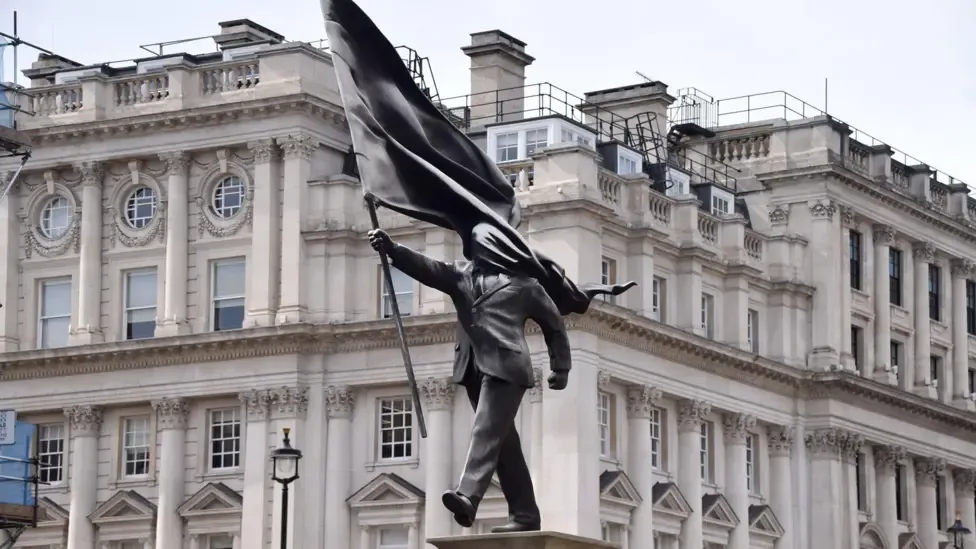
Banksy's marching man (art)
There’s a new Banksy in London, and this time it’s a statue. A man, blinded by his flag, marches off the plinth's edge...
The Darkroom
Things I've seen.