Hey – Jamie here.
You never know who's in the crowd – and at the Brighton Fringe, that turned out to matter quite a lot.
Brighton Fringe is Brighton's answer to the Edinburgh Fringe. My improv troupe made our debut there last weekend, performing to strangers for the first time and, without us knowing, there was an official critic sitting in the front row. With a tremulous tap, we opened the webpage to see what she thought…
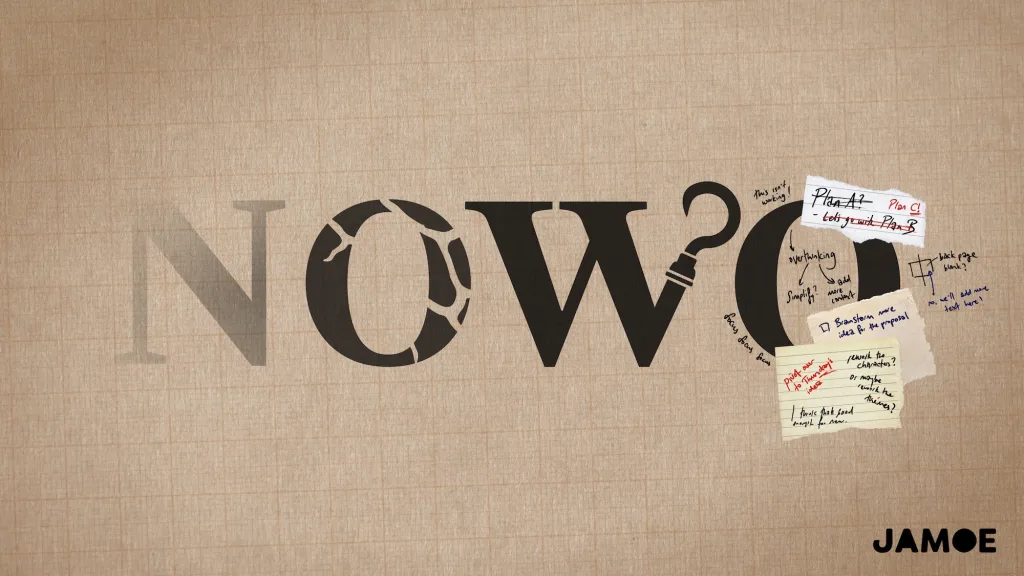
'I have a terrible memory. What's wrong with me?' is the next addition in my series on memory. Instead of giving you more memory tools, I wanted to share how to diagnose why you forgot and how to fix it. I've been romping through the literature and exploring the most common reasons behind why we forget, what our memory system looks like, and the specific ways it fails. Fortunately for you, you just need to remember the pithy mnemonic I invented: NOWO.
Of all the places in America I thought I'd like, San Francisco was top of the list. Well, the foggy city surprised my expectations when I moved there in 2019, and not in a good way. Ironically, I think I was part of the problem. Enjoy part one of this week's story.
As for my notes from the satire writing workshop, enough readers expressed interest that I've decided to turn them into a guide. Expect it in the next few editions.
Table of Contents
- The Brighton Fringe
- Articles & Guides
- Stories & Reflections
- Favourite Finds
- The Darkroom
The Brighton Fringe
'Guys, we GOT REVIEWED.'
I shouldn't. It's immature, right? But it does feel nice – getting praise, being liked, having your hard work recognised. Improv was the hobby I took up to escape the neurotic craving for validation and control, to let go, trust the process, have fun, and play. Being reviewed was anathema to that, but it was also exciting. What if she liked us?
'A hidden highlight…', 'One to be watched…', 'reminiscent of Monty Python…' – she did like us!
For the unfamiliar, improv is any unscripted performance. I do improv comedy, which is when you mix team sports, nerds, and high-risk gambling. In a normal show, an improv team – a troupe – will take a word or story from the audience and invent a 20 to 60-minute show based on that suggestion.
Sometimes the show is a stinker. That's the high-risk gamble you take every time you step on stage. Other times, it's magic, and some incredulous audience member finds you afterwards and asks the question you long to hear: 'Was that really unscripted?'
I think we bottled some of that magic at Brighton, especially in the last show. We did four shows over two days to dip our toe in the water, see how we held up performing to strangers rather than friends and family, and find out if anyone would actually show up. Well, they showed up – sometimes. Shows 1, 3, and 4 had lots of bums on seats. The second show? No one turned up, which was hilarious.
We now know not to book the midnight slot at a youth hostel – unless you want the entire space for rehearsing, doing some impromptu stand-up, and taking silly photos with silly hats. That fun was almost spoilt, though: just before doors closed, we nearly had one audience member. But then the police came and arrested him for being drunk and disorderly.
The silly hats were part of our marketing efforts. My troupe is called 'Histerical', mixing history and comedy. We ask the audience about their week and get them to shout out the historical era they want us to set the show in. There's no limit – any time period will do. At Brighton, people especially favoured the Napoleonic Wars, the Mongol Empire, Ancient Rome, and 1996.
To pull in a crowd, we took to the streets wearing our own mix of hats from different eras: a World War I helmet with bullet holes of questionable origin, the cap of a yodelling Bavarian sans lederhosen, and a top hat for the Victorian gentleman.
The review was 4 stars, which was nice because there's lots more we want to sharpen. We now have a better idea of what's fresh about our show: history, absurdity, and audience participation. Our sights are set on the Edinburgh Fringe. Maybe next year. It's a fun hobby. I've found friends, community, and something endlessly fascinating to nerd out about.
I wondered what happened with that audition I mentioned last time. I still haven't heard back. I'd like to think my parents know. Just as I know they were watching in Brighton, even if they couldn't sit in the audience. I assume they have printers in the next place, so my mum has definitely put the review in a memory album – and dad is secretly re-reading it with a grin.
Feel free to reply to this message or share your questions, requests, and favourite finds here.
Jamie | @JamoeMills
🌧️ From a drizzly London
Find a better way to solve problems that matter.
Articles & Guides
Why You Keep Forgetting (And How To Fix It)
At a glance
- Based on the reader question: I feel like I have a terrible memory. No matter what I try, things just don't seem to stick. Is there something wrong with me?
- I have a terrible memory’ ignores the reality that our memories tend to fail in four distinct ways, each with a different cause and a different repair.
- The four failure modes are: 1) it never went in properly, 2) you only met it once, 3) the hook is weak or missing, and 4) you are simply carrying too much.
- Identifying which failure is happening and how to repair all boils down to NOWO.
Introduction
I wish I earned a bonus whenever one of my students said, ‘I have a terrible memory’. I could use the cash to end world hunger, clear the deficit, and have funds to spare for a holiday. The story is as common as it is misplaced and unhelpful.
Our memories are not ‘good’ or ‘bad’ in any meaningful general sense. Instead, they are specifically fallible. They fail in particular ways, under particular conditions, for particular reasons. And these reasons are largely diagnosable.
The big name in the field of memory is psychologist Daniel Schacter who spent most of his career at Harvard cataloguing the ways memory goes wrong.
Drawing on his 1999 framework, which he updated in 2021, I wanted to pair down the ‘sins of memory’ Schacter highlights to focus on the four most common ‘sins’ and share some practical steps you can take to understand, anticipate, and address your forgetfulness.
For each one, I’ll explain what is happening, how to recognise it, and what lever you can pull to fix it. The goal is not to give you a new technique to add to an already cluttered toolkit. It is to help you replace the vague complaint of ‘bad memory’ with a shrewder question: which kind of forgetting is this and how do I fix it?
Stories & Reflections
The Foggy City: Part One

‘You’ve been here a while now. Do you prefer San Francisco or London?’
Fran, Britney, and I were having lunch in the canteen. I finished my bite and answered without hesitation. Souring my colleagues' excitement wasn't my intention, but I can't deny that seeing their faces sag gave me a smug zing. I'd been turning over the merits of the foggy city for months. In the first few weeks I'd struggled to find any meaningful ways San Francisco had a leg up on London, but I think that was down to user error. I was doing it wrong, trying to experience San Francisco like it was London with more sunshine.
Following this misguided strategy, I found accommodation in the town centre, a trendy studio that had been the ephemeral home of some flip-flop millionaire from the Bay Area who, with an unnerving level of vigour, kept reminding me that I’m welcome to any of the liquor in his bar, even the Japanese whiskey. With every sprightly message, my suspicions grew – what had he done to the whiskey?
I never found out. I needed to keep my wits. The alleyway beside the building served two purposes: it was where people came to inject drugs, and it was the only way in and out of the building. My morning routine adapted. I would brush my teeth, put my underpants on, and peek out the window to count how many opioided-zombies I needed to navigate around for my commute...
Favourite finds
Things worth passing along.
Do you have a favourite find (ideas, books, quotes, purchases, etc.)? Share it here.
The death of good taste (video essay)
When chronically uncool people decide to become arbiters of taste – and then enforce that through political and economic power – something predictable happens: no one else wants to play the game. Percia Verlin's video makes this case through the 2026 Met Gala, Zuckerberg and Bezos trying to buy "cool", and Palantir, a weapons and surveillance company, making chore coats to feel cute and trendy.
The thought Verlin shares that fashion and culture will move in a direction diametrically opposed to what the oligarchy thinks is 'cool' got me wondering if punk and grunge are in for a comeback. Walking around Brighton last weekend, it sure looks like it.
Why you shouldn't be a content creator (video essay)
Robert Tolppi has spent seven years making videos full-time and reached a million followers on TikTok. His novel re-framing was to think about the influencer economy like a slot machine – just enough sporadic wins to keep you pulling the lever, but never enough to make a living. The exception are the people selling you the dream.
Tweaking Mary Oliver (reminder)
Mary Oliver was a Pulitzer Prize-winning poet who spent her days writing poems about paying attention. A the end of The Summer Day, she asks:
'Tell me, what is it you plan to do / with your one wild and precious life?'
She never said every hour of it had to be purposeful, which is a reminder I like to underline and highlight. Some hours are just for lounging gently until the rice is ready.
The NHS's two-minute blood run (health & tech)
Moving a blood sample between Guy's Hospital and St Thomas' – two hospitals that are basically neighbours on the Thames – takes over half an hour by road. By drone, it takes less than two minutes.
I learned that the NHS launched a trial doing exactly this. The faster results mean surgeons can decide sooner whether a patient is safe to operate on.

Accents on a Mac (tiny keyboard trick)
Hold down any letter key on a Mac (or iPhone) and a small menu will appear showing every accented version of that letter – è, é, ê, ë, and so on. Click the one you need, or press its corresponding number.
I used workarounds for years before discovering this. Naïve of me, I know.
The Darkroom
Things I've seen.