Hey – Jamie here.
When we think about memory, we usually think about trying to remember things from the past – recalling names, facts, and figures. But forgetting to do things we planned makes up the majority of what we forget. These two types are called retrospective forgetting and prospective forgetting – or ‘future forgetting’ – respectively.
In this week’s piece, I’ve broken down the different kinds of future forgetting that most often trip us up, along with their likely causes, so you can better support your memory. I’ve been slowed down by a medical hiccup, so I need a bit more time to put the finishing touches on the article: smoothing the language, fact-checking, and so on. The piece will go live on the website at 12.00 pm BST on Monday.
This week’s story is a newsletter-exclusive taste of a larger piece I’m writing about my Nana Bapa. It’s the most ambitious piece I’ve worked on, weaving together my family’s history, Malthusian economics, and one of the British Raj’s most dreadful cover-ups. The scope of the ambition also means I need to chip away at it slowly, as the topic is delicate and I don’t want to misrepresent anything.
Table of Contents
- Clowning
- Articles & Guides
- Stories & Reflections
- Favourite Finds
- The Darkroom
Clowning
Everyone told me I would hate it, but I was basically laughing for two days straight.
This week, I took part in an intensive clowning workshop. Clowning is the art that clowns learn, and there are many different forms. From what I’ve gathered, it revolves around existing in a state of play: sharing your unfiltered reactions, embracing failure, and breaking the fourth wall to engage directly with the audience.
Some actors who have studied clowning include Sacha Baron Cohen, Emma Thompson, and Helena Bonham Carter.
I signed up because I thought it would push me: to be more open, less performative, more present, and more comfortable with vulnerability. I think when we go through pain, we become guarded. We start walking around with our metaphorical fists up, using them to project confidence and bravado. Sadly, all we’re really doing is projecting our insecurities and disconnecting ourselves from the world.
Real confidence and healing comes when you relax and put your fists down. That openness allows you to connect with others. That’s one of the big ideas we kept coming back to during the workshop: being relaxed, building rapport, showing our unfiltered feelings, and heightening our sensitivity to what pleases and displeases the audience.
Most of this was done through games. The most hilarious was The Impossible Task. One by one, we took to the stage and were told to sit on a chair without making a noise. The instructor would then place a whoopee cushion on the chair and tell us to begin.
The Secret Task was also excellent – and something you can try with friends. Get one or more people to leave the room. While they’re gone, decide what you want them to do when they come back in (e.g., pull a spoon out of the kitchen drawer). When the player(s) return, the audience claps based on how close they are to completing the task, with more exuberant clapping as they get "warmer". In my group of three, we had to hold hands, skip clockwise in a circle, and moo like cows.
One of the drumbeat phrases the instructor kept repeating was, 'You’re not with us. Be with us.' What? If I’m not with you, where am I? Usually, I was in my head – planning or placating myself for having messed up. By the end of the workshop, we were all starting to get it. 'Who is most with us?' We would look at the clowns on stage and begin to see what we had been blind to hours before. Some were "performing" – thick with character and façade, trying to be funny – while others were curious, open, and present.
One of the notes I jotted down was: The clown paints a picture in the mind of the audience. The audience provides the paint. The clown is the brush.
When I started improv, I would come in with a plan, like a train on a track. I would deliver that plan regardless of what changed and be rewarded with silence. From my cursory understanding of clowning, that silence makes sense. I wasn’t connecting with the audience or my scene partners to discover what they were bringing to the moment. I was a brush without paint, trying to create something I thought was "funny".
I wonder how often that happens in life. We have a conversation with someone, script how we think it should go, execute that script with precision regardless of context, and then part ways feeling emptier than before.
Feel free to reply to this message or share your questions, requests, and favourite finds here.
Jamie | @JamoeMills
🏳️🌈 From a prideful weekend in London
Find a better way to solve problems that matter.
P.S. The journal will take a break on the 19th July and return on the 2nd August, as I'll be away and hopefully enjoying some summer sun. Catch up soon.
Articles & Guides
At a glance
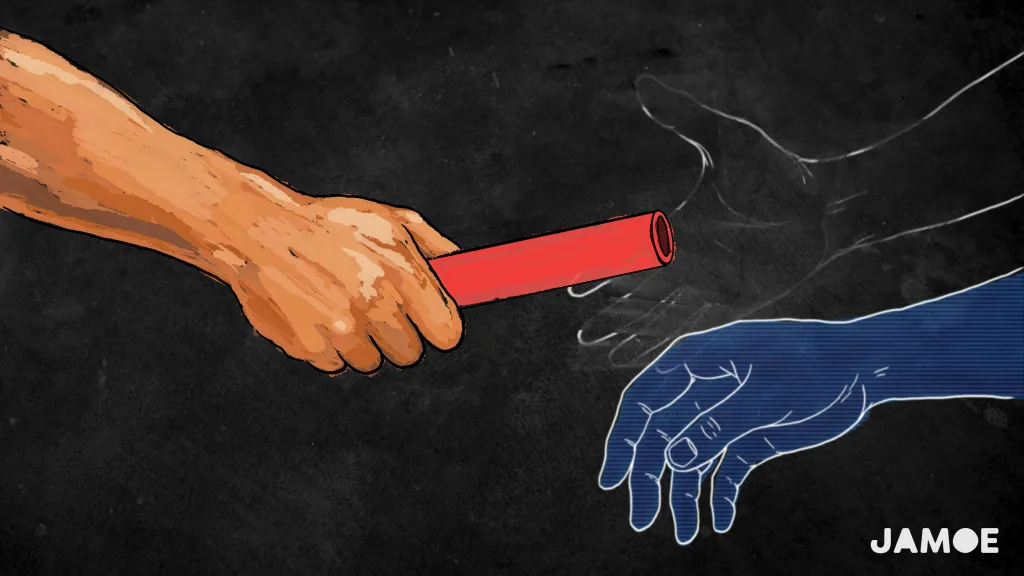
Based on the reader question: Why do I keep intending to do things and forgetting to actually do them?
- Most of what we forget is not in the past, but in the future. We make promises to ourselves, then carry on as though the promises will somehow remember themselves.
- These promises are known as prospective memory, and it's failure is mostly a cue problem, not a character flaw.
- Overcoming this problem is a matter of designing a better environment: if-then plans, physical cues, and intentions tied to things you already do rather than things you hope to notice later or actively monitor.
Introduction
Most of the things you forget are in the future, not the past.1 We plan to do something, like call the restaurant or buy some flowers, but it slips out mind, three weeks go by, and our partner starts talking about divorce.
In the world of psychology, this is known as prospective memory. Despite it being the bulk of the things we forget, most of the attention is given to retrospective memory: recalling information from the past, like facts, figures, or events.
For this piece, I will refer to the different types of forgetting as:
- Future forgetting: forgetting to do something in the future; a prospective memory failure.
- Past forgetting: forgetting to recall something from the past; a retrospective memory failure.
With past forgetting well-covered in previous pieces, let's focus on the greatest cause of memory frustration and unpack the anatomy of future forgetting, why it's vulnerable, and how to use the If-Then Technique to more effectively keep our promises.
Stories & Reflections
Nana Bapa: Part 1

Based on true events
(1)
It was nearly time to dock. For weeks the boy had lived under the ocean’s whim and now, standing on the deck’s edge, looking out at the growing horizon, that journey was coming to an end. While the waters had been mostly calm and the monsoon winds generous, he had not forgotten the ocean’s appetite for rage.
They had been at sea for a few days. The boy had taken to spending his nights gazing at the endless stars, trying to memorise the constellations his uncle had taught him. As he found Venus, a frenzied terror swept over the ship. When he looked up again, the stars were gone.
Down in the hull, his uncle had harnessed them both with rope, tying the knots with practised hands while his eyes were blinded by the dark. As the violence grew, their palms tore under the stubbornness of their white-knuckled grip. The boy would not die on this ship. That was still decades away. Others weren’t so lucky.
Every uncaring wave that lashed the ship jerked loose more passengers, smacking them against the walls and splintered beams, their bodies churned like soured leftovers inside the stomach of some frightful beast. Come the morning light, those with broken bones considered themselves blessed, while those unaccounted for were considered drowned.
Favourite finds
Things worth passing along.
Do you have a favourite find (ideas, books, quotes, purchases, etc.)? Share it here.
Baseball's steroid era (fun fact)
Baseball in the 1990s and early 2000s was awash with steroid rumours, and the aftermath left statisticians with a fun forensic puzzle. They couldn’t see the drugs directly, but they did look at the injury data and found a suspicious pattern.
Anabolic steroids can help muscles grow faster than tendons and ligaments adapt, which can leave the body badly balanced. In baseball, that seemed to show up as more Achilles tendon ruptures, quadriceps tears, hamstring strains, rotator cuff tears, and biceps injuries around the elbow.
So if you're going to take steroids and want to lie, keep your mathematically inclined friends away. And if you're drug-free, but new to working out and don't want to get injured, be sure to condition your tendons and ligaments before cranking up the intensity.
About Time (film)
On the theme of father figures, here's one of my favourite films that's perfect for a Sunday afternoon. It'll make you laugh, hold the precious parts of your life tighter, and leave you with a little lump in your throat.
Liftosaur (app recommendation)
I’ve been using Liftosaur to track my gym progress. It's simple to use, but can get very nerdy, letting you build your own programmes with a simple scripting language.
It has a generous free version, plus a lifetime purchase if you want the fancier bits. If your exercise brain likes structure, numbers, and the satisfaction of tracking your process, you'll love Liftosaur.
I also have a soft spot for the app icon... no prizes for guessing why.
Heartstopper (graphic novel, TV series – and film)
Back in my Redraft newsletter days, I featured Heartstopper when the series first landed on Netflix. It’s now coming to an end with the final book in the series in bookshops and a feature film, Heartstopper Forever, arriving on Netflix on 17 July 2026.
It's a sweet, tender love story that subverts a lot of the tragedy-shaped tropes, replacing them with something more wholesome.
The Darkroom
Things I've seen.