Hey – Jamie here.
You might remember what to say, but struggle to express it. So while I continue to chip away at the next memory-focused article, 'Why We Forget and How To Fix It', I wanted to share the recipe for having magnetic conversations I learned from my improv practice.
It's a great way to turn small talk into big talk, build rapport, and works whether you're on a date, in an interview, catching up, or trying to add some spice to a chat that's gone bland.
But before we get there, a small update from behind the curtain.
As self-appointed captain of this website for problem solvers, I've also been thinking how best to invest in Jamoe's future. On one side, there's the economic calculus of investing in more tools for maximising output. On the other side, there are the human elements needed to keep you moving forward.
Noticing how drained I was feeling, I decided to ditch investing in more tooling and invited a talented friend into the fold. They're the designer behind the Oxford Notes book cover, the course mock-ups, and the playful cover art for the articles. You can find some behind the scenes peeks into the design process at the end of this week's story.
I also had the privilege of doing a satire writing workshop with someone I have been admiring from a distance since I was 18, the former head writer at The Onion. I thought I'd pass on the workflow he shared with us.
Table of Contents
- Writing Satire with Onions
- Articles & Guides
- Stories & Reflections
- Favourite Finds
- The Darkroom
Writing Satire with Onions
The Onion is a US-based satirist newspaper. It's home to articles like, 'Nicer Shampoo Tragically Worth The Extra Money', 'Good Spatula Dirty', and 'Town Dad Sure Knows A Lot About Local Weather Woman'.
At university, my friends and I would mostly chuckle over their political commentary: 'Authorities Unearth Mass Grave Of Trump Advisors', 'Regretful Conservative Wakes Up To Find He Drunkenly Got Nazi Tattoo Removed', 'Depraved Inbred Community Distances Itself From Prince Andrew'.
When my inbox chimed with an opportunity to learn how to write satire with the ex-Head Writer of The Onion, I jumped. I've not written with other writers before, so the terror of sharing my attempts at being funny crept in when we were asked to open the collaborative working document.
I thought we'd be able to hoard the theory before scurrying away somewhere private to practise. Nope. But Mr. Onion, Andy Miara, the fellow leading the workshop, shared the workflow they used to remove the ego and fear from the writing process and focus on output. I loved it, so wanted to share it.
After going through some example headlines, the theory of writing satire, and a framework for generating fresh ideas, we were given 30-minutes to find a nook and draft our own headlines. The priority was volume.
When the timer buzzed, we were asked to shortlist our best work and anonymously drop them into the collaborative document. Once all our headlines were added, we created a shortlist, adding our name next to any headline that made us laugh.
Making the source of the headlines anonymous encouraged us to be braver, more creative, and less attached. Andy said that at The Onion, having a funny idea exist is more important than who thought of it. So whether one person came up with all the best ideas or it was evenly distributed, it came second to hitting the day's editorial target.
Seeing the fun angles and expression of the other writers was excellent inspiration for finding new ways to think about comedy. When it came to my headlines, the actual spread of votes was the opposite of what I expected. The headlines I wrote absent of any effort were the most popular, while the ones I laboured over were the least popular.
After all the votes were cast, we did the final step in the workflow: we defended our top picks and pitched how we would develop them into full articles. The pleasing twist was that we were now advocating for headlines we hadn't written. The only stake we had in them was seeing something playful and shiny we wanted to explore – a liberating change from having to defend your own work and right to be in the room.
Here's a look at some of our UK-leaning headlines:
- CLAVICULAR CUTS OFF NOSE TO SPITE HIS FACE
- GORILLAS WORRIED WHO WILL NARRATE THEIR LIVES AS ATTENBOROUGH TURNS 100
- WATER COMPANIES LAUNCH FREE IMMERSIVE CHOLERA EXPERIENCE FOR LOCAL VILLAGERS
- TOILET PAPER SHAREHOLDERS ‘HAVE A GOOD FEELING’ ABOUT HANTAVIRUS
- KEIR STARMER HASN’T NOTICED ITS TIME TO LEAVE, DESPITE VOTERS SIGHING, SLAPPING THIGHS, AND SAYING 'RIGHT’
Would you like a copy of the full theory and framework for writing satire? I, naturally, took copious notes, so reply to this message if you'd like a copy to sharpen your funny bone.
You can also share your questions, requests, and favourite finds here.
Jamie | @JamoeMills
☀️ From a heatwaving bank holiday weekend in London
Find a better way to solve problems that matter.
P.S. I have my first ever audition this week. Fingers crossed.
Articles & Guides
The Art of Magnetic Conversation: Build Up, Not Out
At a glance
- Based on the reader question: what separates the people you never want to stop talking to from everyone else?
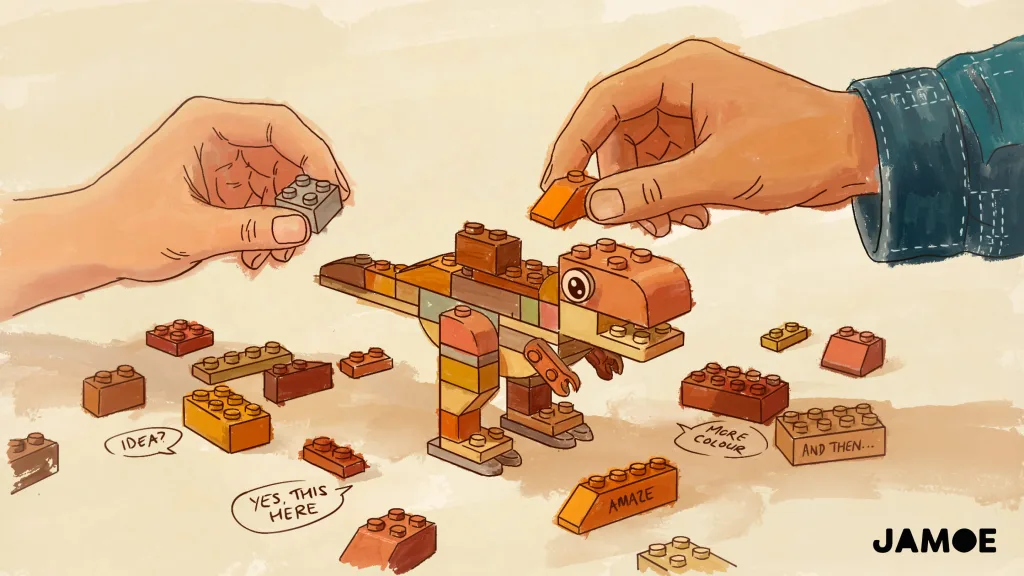
- Most people misread the improv principle 'Yes and…' The 'and' means focus on building on what's been said rather than adding more topics to the conversation
- You don't need to be listening to build a conversation out; you must be listening to build a conversation up
- The people you never want to stop talking to arrive present. They let the conversation show them where to go, rather than arriving with a prepared stack of topics
Introduction
Learning to bring a conversation to life turned out to be simpler than I expected, and the insight came from an unlikely place: improv.
Specifically, from realising I'd been misreading its foundational principle, 'Yes and…' Once I corrected my understanding, I started noticing it everywhere, especially in the people I find the most magnetic to talk to.
The fix is small. It's a pivot in how you read the word 'and': not as in 'add more topics to the conversation', but 'build on what's already there.' That one shift is the difference between satisfying conversations that go somewhere and conversations that sprawl until you've both forgotten what you were even talking about.
Stories & Reflections
Creative Company

I found Vincent the way you find most good things: in a bookshop. We were both attending a signing event by one of our favourite authors and happened to be neighbours in the queue. As seems to be the custom for my best friends, Vincent promptly left the country. The spring of our friendship had arrived at the tail-end of his time in the UK and he returned to New Zealand before the Home Office threatened to send him to Rwanda.
It has become a bit of a pattern. Whenever I feel like I have found a member of my tribe, geography intervenes and throws them somewhere tragically far: Malaysia, Australia, Estonia, North London. When I’m feeling particularly persecuted by this misfortune, I browse flights and wonder if I should just get a normal job...
Favourite finds
Things worth passing along.
Do you have a favourite find (ideas, books, quotes, purchases, etc.)? Share it here.
A trillion seconds (perspective trick)
The only way I've found to feel how large a trillion actually is: convert it to time. One million seconds is 11.5 days. One billion seconds is nearly 32 years. One trillion seconds is 31,700 years – roughly twice as long as recorded human history.
I think about this whenever a billionaire starts whinging about being asked to pay more than 0% tax.
Race Across the World (BBC iPlayer)
Five pairs of travellers racing across a continent on about £1.50 a day. No flights, no smartphones, and thousands of miles to cover before anyone else.
Someone recommended it to me during a tough stretch, and I loved it. It's ostensibly a race, but it's actually about what happens when you strip away every comfort and make people rely entirely on each other and the kindness of strangers. Six series in, it hasn't lost the magic.
The Reverse Turing Test (language)
The Turing Test is a method proposed by mathematician Alan Turing – played by Benedict Cumberbatch in the terrific Imitation Game – in 1950 for gauging whether a computer is exhibiting human levels of intelligence.
With the internet now flooded with AI writing, readers are conducting Reverse Turing Tests on everything they read. Writers, sensing this, have started inserting more casual, exuberant, and unhinged language into their work to prove there's a human behind the keyboard.
Ain't that a wicked-crazy way of asserting your humanity!?!?
A dustpan for your kitchen counter (household tip)
Cleaning crumbs off countertops is a constant toil. A friend solved it with elegant simplicity: a dedicated dustpan and brush, separate from the floor one. I've since acquired one and have been unreasonably pleased with it.
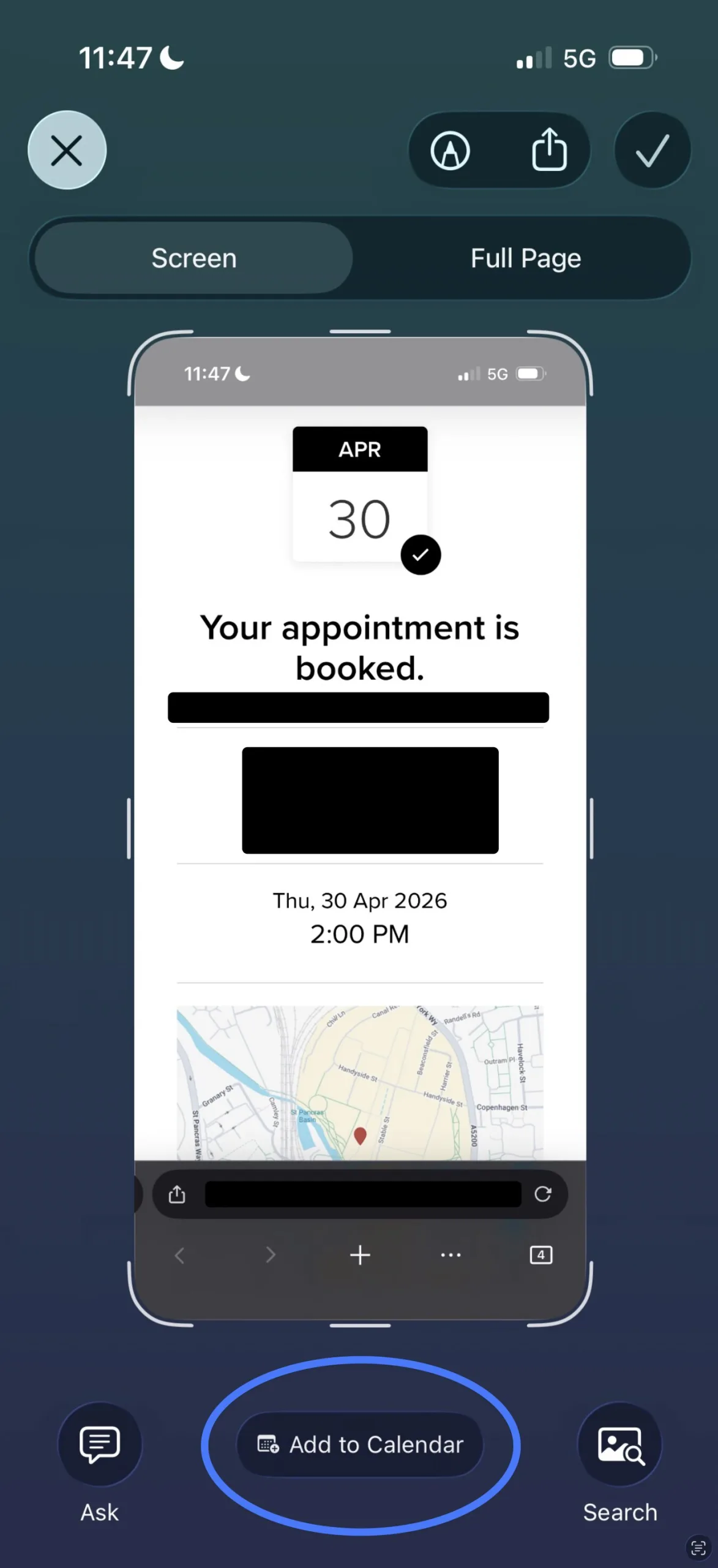
Pulling calendar events from your screen (iPhone life infrastructure tip)
AI on the iPhone is still finding its feet, but this feature has solved a problem that's bothered me for years.
Take a screenshot on an AI-enabled iPhone and an 'Add to Calendar' option now appears, pulling the relevant details from the screen directly into your schedule – no copying, no typing, no sleeping through your coronation (again).
The Darkroom
Things I've seen.